For travelers from North America, Europe, or Australia, renting a car and hitting the open road is the ultimate definition of travel freedom. The idea of navigating a new country at your own pace, stopping at hidden viewpoints, and blasting your favorite playlist sounds like the perfect holiday.
However, when planning a trip to Nepal, applying that same Western "road trip" mentality can quickly turn a dream vacation into an incredibly stressful and exhausting ordeal.
While self-drive car rentals do exist in Nepal, the vast majority of experienced international travelers choose a different route: hiring a private vehicle accompanied by a professional local driver. Here is an honest, practical breakdown of what driving in Nepal really looks like, and why opting for a local driver is the single best choice you can make for your safety, sanity, and comfort.
The Reality Check: What Western Drivers Don’t Expect
Driving in the West is defined by strict lane discipline, predictable traffic lights, and well-mapped highways. In Nepal, the rules of the road are governed by a completely different fluid dynamic that takes years of daily local experience to understand.
+-----------------------------------------------------------------------+
| THE NEPAL HIGHWAY REALITY
+-----------------------------------+-----------------------------------+
| WESTERN ROAD EXPECTATIONS | REALITY ON NEPAL HIGHWAYS |
+-----------------------------------+-----------------------------------+
| • Clear lane markings & signs | • Potholes, gravel, & unpaved mud
| • Predictable traffic flow | • Free-roaming livestock & cows
| • Overtaking only on straightaways | • Blind-corner overtaking honks
| • Smooth, multi-lane highways | • Single-lane mountain passes
+-----------------------------------+-----------------------------------+
1. The Terrain is Unforgiving
Nepal is home to the highest mountains on Earth, which means our roads are carved directly into vertical hillsides. A typical drive from Kathmandu to popular hubs like Pokhara, Chitwan, or the Mustang region involves thousands of steep switchbacks, narrow single-lane passes, and sheer cliff drops with no guardrails. What looks like a short 150-kilometer drive on Google Maps can easily take 6 to 8 hours due to the sheer geography.
2. The Infrastructure is Dynamic
Monsoon rains, landslides, and continuous highway expansion projects mean that road conditions change by the hour. A beautifully paved section of asphalt can abruptly transform into a bumpy dirt track, deep gravel, or a muddy river crossing. Without an elevated 4WD vehicle and an intimate knowledge of which lines to take, a self-drive sedan or compact SUV can easily get stuck or damaged.
3. The Unwritten Rules of Local Traffic
In Nepal, the horn is not an expression of anger—it is a vital communication tool. Drivers honk continuously before blind mountain curves to warn oncoming traffic. Overtaking large, brightly decorated local buses and heavy cargo trucks on narrow roads requires a delicate, aggressive dance. Furthermore, you must always be prepared to brake for free-roaming water buffaloes, cows (which are sacred in Nepal), and local pedestrians walking along the highway shoulders.
Why Hiring a Local Driver Changes Everything
Choosing a vehicle service that includes an experienced local driver is not a luxury; it is a practical travel strategy that completely transforms your journey from an exhausting chore into a true vacation.
+------------------------------------------------------------------------+
| BENEFITS OF A LOCAL DRIVER |
+------------------------------------------------------------------------+
| [ SAFETY ] --> Masterful handling of mountain switchbacks
| [ RELAXATION ] --> Sit back, enjoy the views, and take photos
| [ LOGISTICS ] --> Driver handles navigation, parking, & checkpoints
| [ INSIDER KNOWLEDGE ] -> Discover the best local food stops & viewpoints
+------------------------------------------------------------------------+
Zero Navigation Stress: You won't have to constantly stare at a GPS map or worry about losing mobile signal in deep river valleys. Your driver knows the routes by heart and is fully updated on real-time road closures, construction delays, and detours.
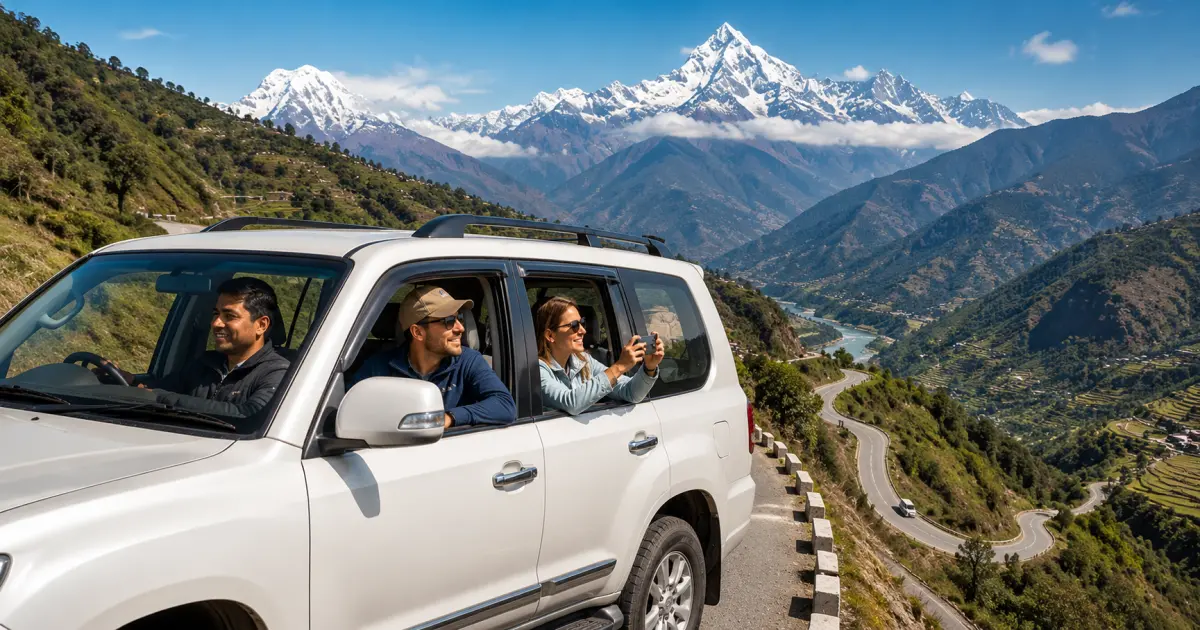
True Sightseeing Freedom: Nepal features some of the most breathtaking panoramic landscapes in the world. If you are the one white-knuckling the steering wheel and focusing entirely on avoiding potholes, you miss the scenery. With a driver, you can keep your eyes glued to the snow-capped peaks and terraced rice fields.
Logistical Smoothness: Finding parking in crowded tourist areas like Thamel in Kathmandu or Lakeside in Pokhara can be a nightmare. Additionally, entering certain districts requires navigating local police checkpoints and environmental permits. A local driver manages all of this seamlessly while you stay comfortable inside the vehicle.
Cultural Bridges and Hidden Spots: Local drivers are incredible hidden assets. They know exactly which local highway restaurants (bhattis) serve the cleanest, most delicious traditional Dal Bhat, where the cleanest restrooms are located, and which roadside stalls sell the freshest local fruits.
Making the Right Choice for Your Group
When booking your transport with us, you can match the vehicle perfectly to your specific itinerary and group size, ensuring maximum physical comfort on long mountain journeys:
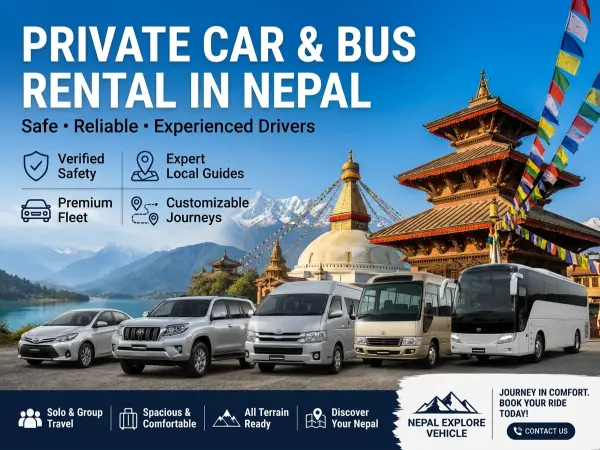
For Couples or Solo Travelers: A modern, air-conditioned sedan or compact crossover provides a smooth, quiet ride for shorter valley trips like Kathmandu to Nagarkot or Bhaktapur.
For Small Families or Small Groups (3–5 people): A premium, rugged 4WD SUV (like a Toyota Land Cruiser or Scorpio) gives you the necessary ground clearance, heavy-duty suspension, and comfort needed to conquer rougher trails like Upper Mustang or the bumpy roads into Chitwan.
For Larger Groups or Tour Groups: A spacious, air-conditioned tourist van (like a Toyota HiAce) offers ample legroom, dedicated luggage space, and large windows so everyone gets an uncompromised view of the Himalayas.
Conclusion: Prioritize Your Peace of Mind
Your trip to Nepal should be filled with awe, adventure, and beautiful memories—not back-straining exhaustion from fighting heavy mountain traffic and unpredictable road conditions.
By choosing a private vehicle with a professional driver, you are buying ultimate peace of mind. You get to arrive at your destination feeling refreshed, safe, and ready to explore everything our beautiful country has to offer.
Ready to Plan Your Stress-Free Journey?
Don't let logistics compromise your vacation. Explore our premium fleet of vehicles and book a ride with Nepal's most reliable, experienced local drivers today.