
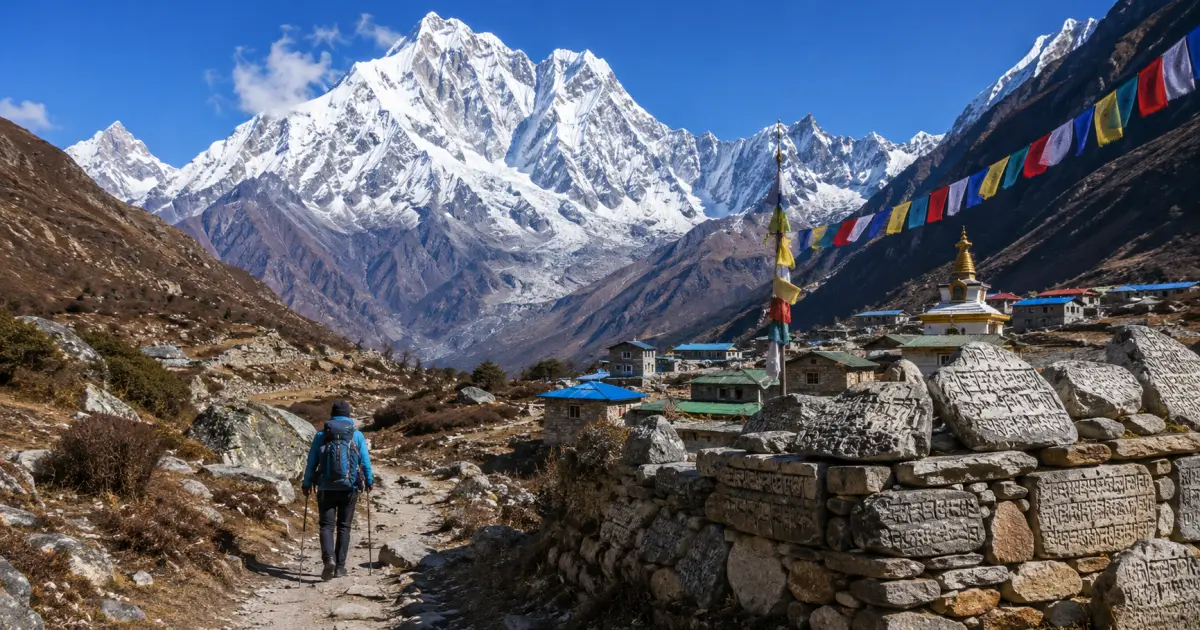
The Langtang Valley Trek is celebrated as the "Valley of Glaciers" and stands out as one of the most accessible yet profoundly beautiful alpine adventures in Nepal. Located just north of Kathmandu, this 10-day journey takes you through the protected landscapes of Langtang National Park. You will transition seamlessly from lush, bamboo and rhododendron forests inhabited by rare wildlife like the Red Panda, into a striking high-alpine sanctuary of towering ice massifs, culminating in an optional high-altitude ascent of Tserko Ri at 4,984 meters (16,351 feet).
Unlike the sprawling circuits of other regions, Langtang offers an intimate encounter with the authentic Tamang and Tibetan-Buddhist cultures. You will walk past ancient mani stone walls, prayer wheels driven by rushing glacial melt, and traditional stone villages rebuilt with remarkable resilience. Framed by the dominant peak of Mt. Langtang Lirung, this trek delivers grand Himalayan vistas, pristine glacial moraines, and rich local hospitality without requiring a domestic flight.
.jpeg)
Trek Highlights
· Conquer Tserko Ri Summit: Challenge yourself with a high-altitude climb to the summit of Tserko Ri at 4,984m (16,351ft), rewarding you with an unforgettable, 360-degree panoramic view of the entire Langtang Himal range.
· The Majestic Langtang Lirung: Experience breathtaking, up-close vistas of the dominant ice massif of Mt. Langtang Lirung (7,227m) alongside neighboring alpine peaks like Ganchenpo and Mt. Kimshung.
· Intimate Tamang & Tibetan Culture: Journey through resilient mountain communities to experience authentic Tamang traditions, pass historic water-driven prayer wheels, and walk alongside the longest stone-carved Mani walls in the region.
· Explore Historic Kyanjin Gompa: Spend time exploring a 300-year-old ancient Buddhist monastery set in a dramatic U-shaped glacial valley, and visit the famous local alpine factory to sample fresh yak cheese.
· Langtang National Park Sanctuary: Hike through pristine, rapidly changing microclimates—ranging from lush sub-tropical bamboo and blooming rhododendron forests to stark alpine moraines—where you can spot exotic wildlife such as Langur monkeys or the rare Red Panda.
📋 TRIP OVERVIEW
TRIP NAME | Langtang Valley Trek |
DURATION | 10 Days |
MAXIMUM ELEVATION | 4,984m (Tserko Ri Summit Viewpoint) |
TREK DIFFICULTY | Moderate |
ACCOMMODATION | 2-Star Hotel & Mountain Tea House |
MEALS | Breakfast, Lunch & Dinner During Trek |
STARTING POINT | Kathmandu |
ENDING POINT | Kathmandu |
BEST SEASONS | Spring & Autumn |
TRANSPORTATION | Private Vehicle / Ground Transportation |
MAJOR HIGHLIGHTS | Langtang Village, Kyanjin Gompa, Tserko Ri Peak & Yak Cheese Factory |
FLIGHT INCLUDED | None (100% Ground Transportation) |
ACCLIMATIZATION DAY | Kyanjin Gompa |
TREK STYLE | Tea House Trek |
Trip Cost & Package Details
Total Cost Per Person: $655 USD
🌤️ Langtang Valley Trek Weather & Temperature Guide
· Because the Langtang Valley Trek rapidly ascends from a low-altitude, deeply forested river valley up into a high-alpine glacial basin, you will experience a dramatic shift in microclimates over just a couple of days on the trail.
· Lower regions (Syabrubesi to Lama Hotel) are generally warm, humid, and sheltered by dense bamboo and rhododendron canopies. As you climb above 3,000 meters past Ghoda Tabela into Langtang Village and Kyanjin Gompa, the forest line completely disappears. Here, the valley opens up, alpine winds pick up, and temperatures drop sharply below freezing, especially during the evenings, nights, and early mornings. At the highest viewpoints like Tserko Ri, the environment becomes entirely alpine, characterized by biting sub-zero winds, exposed glacial moraines, and freezing conditions year-round.
🌡️ Temperature by Major Trekking Destinations (Seasonal Averages)
Destination | Altitude | Spring (Mar - May) | Autumn (Sep - Nov) | Winter (Dec - Feb) |
Syabrubesi | 1,550m / 5,085ft | 10°C to 20°C
(50°F to 68°F) | 10°C to 20°C
(50°F to 68°F) | 5°C to 15°C
(41°F to 59°F) |
Lama Hotel | 2,380m / 7,808ft | 6°C to 16°C
(43°F to 61°F) | 5°C to 15°C
(41°F to 59°F) | -2°C to 8°C
(28°F to 46°F) |
Langtang Village | 3,430m / 11,253ft | 2°C to 12°C
(36°F to 54°F) | 0°C to 10°C
(32°F to 50°F) | -7°C to 5°C
(19°F to 41°F) |
Kyanjin Gompa | 3,870m / 12,696ft | -5°C to 10°C
(23°F to 50°F) | -7°C to 11°C
(19°F to 52°F) | -12°C to 4°C
(10°F to 39°F) |
Tserko Ri Summit | 4,984m / 16,351ft | -10°C to 2°C
(14°F to 36°F) | -12°C to 0°C
(10°F to 32°F) |
🍂 Best Time to Trek
Autumn (September – November) – Best Season * Crystal-clear skies with the sharpest mountain views of Mt. Langtang Lirung.
Highly stable, dry weather and comfortable trekking temperatures.
Perfect conditions for summiting the Tserko Ri viewpoint.
Spring (March – May) – Most Colorful Season
Lower trails explode with vibrant, blooming red and pink rhododendrons.
Mild, warming weather brings out local wildlife like Langur monkeys and Red Pandas.
Crisp, beautiful mountain views, especially during clear mornings.
Winter (December – February) – For Solitude
Deeply blue, clear winter skies with crowd-free trails and peaceful villages.
Bitterly cold temperatures; sub-zero freezes at night in Kyanjin Gompa.
High-altitude trails to Tserko Ri can be heavily snow-covered or icy.
Monsoon (June – August) – Not Recommended
Lower forest paths become muddy, humid, and prone to leeches.
Mountain vistas are heavily obscured by thick cloud cover and fog.
Risks of rain-induced landslides along the highway driving route.
💡 Important Information
· Altitude & Acclimatization
o The trek reaches a maximum high altitude of 3,870m at Kyanjin Gompa and 4,984m at the Tserko Ri view point, where altitude sickness (AMS) can occur.
o A dedicated exploration and rest day in Kyanjin Gompa helps your body adjust safely before tackling the peak.
o Walk at a steady, slow pace ("Bistari, bistari"), stay well-hydrated by drinking 3–4 liters of water daily, and strictly avoid alcohol on the way up.
· Private Jeep Upgrade Available
o Upgrade your ground transportation from Kathmandu to Syabrubesi to a private 4x4 Jeep for a much smoother, faster, and more comfortable mountain journey.
o Offers a safer ride along the bumpy, winding curves of the Pasang Lhamu Highway compared to local public buses.
· Travel Insurance Required
o Comprehensive travel insurance is mandatory for this trek.
o Your policy must specifically cover high-altitude trekking up to 5,000 meters and include emergency helicopter evacuation services.
🌪️ Weather Challenges to Expect
The Langtang Valley Trek climbs steeply through distinct microclimates over a short period. Prepare for three main atmospheric and geographical obstacles:
Freezing Valley Nights: While the lower forest trails are humid and warm, early mornings and nights at Langtang Village and Kyanjin Gompa drop sharply below freezing, regularly plunging to -5°C to -12°C with biting alpine winds.
The High-Altitude Wind Chill: Pushing past the tree line toward Kyanjin Ri or the Tserko Ri Summit exposes you to intense, sub-zero wind chills. A windproof shell jacket, a fleece-lined neck buff, and wrap-around sunglasses are absolutely essential to prevent windburn and hypothermia.
Exposed Landslide & Avalanche Zones: The narrow gorges of the Langtang region contain active landslide paths and historic rockfall zones (particularly around the Pairo landslide area and near the old Langtang Village site). Sudden heavy rains or unseasonal snowstorms can trigger unstable terrain, requiring you to strictly stay on the main trail and follow your guide's local route updates.
🍛 Food & Accommodation
Teahouse Lodging
Lower Regions (Syabrubesi to Lama Hotel): Cozy, family-run wooden and stone lodges offering twin beds, hot running water (often solar or gas-heated), and a mix of western-style flush toilets.
Higher Regions (Langtang Village to Kyanjin Gompa): Standard, rustic mountain tea houses rebuilt beautifully with stone and wood. Rooms are simple, clean, and completely unheated with separate twin beds. Expect communal squat or standard facilities, and intensely cold nights—making a heavy down sleeping bag mandatory.
Daily Meals
Your package includes three hearty meals a day selected from local teahouse menus:
The Fuel: Unlimited refills of fresh, high-energy Dal Bhat (rice, lentil soup, and organic vegetable curry)—the ultimate energy source for long hiking days.
Western & Local Options: Eggs, porridge, pancakes, pasta, fried noodles, spring rolls, and garlic soup (highly recommended for helping your body adjust to the altitude).
Local Delicacies: Don't miss trying fresh Yak Cheese from the alpine cheese factories above 3,500m, or warming up with a cup of hot Sea Buckthorn juice, a local mountain berry rich in antioxidants.
📶 Connectivity, Charging & Wi-Fi
Feature | Availability | Expected Local Cost |
Mobile Signal | NTC has best coverage (reaches Kyanjin Gompa). Ncell works well in Syabrubesi but drops out past Lama Hotel. | $4 – $8 USD for a local tourist SIM + data pack. |
Wi-Fi | Available at most teahouses. Can be very spotty or slow during bad weather and peak evening hours. | Free in lower villages; $2 – $4 USD per night in higher regions. |
Electricity | National grid in Syabrubesi. Higher up, teahouses rely on solar/micro-hydro with charging in the dining hall. | Free lower down; $1 – $3 USD per device or power bank upper trail. |
🩺 Difficulty & Altitude Safety
🎒 Quick Packing Guide
We provide a duffel bag, a down jacket, and a winter sleeping bag for the trek if needed (to be returned after the trek). You must bring your own personal layers:
· Clothing Layers: Moisture-wicking thermal base layers, breathable fleece jackets, trekking pants, and a waterproof/windproof outer shell jacket and pants to protect against the alpine wind chill at higher elevations.
· Footwear: Broken-in, waterproof hiking boots with good ankle support, comfortable camp shoes (sandals or sneakers) for the evening, and 4–5 pairs of thick wool trekking socks.
· Gear: Polarized sunglasses (essential for the Tserko Ri snow glare), heavy insulated gloves, a warm fleece-lined beanie, a headlamp with spare batteries, a 10,000+ mAh power bank (due to centralized solar/hydro charging stations), trekking poles, and a 30L–40L daypack.
· Personal Items: High SPF sunscreen, lip balm, wet wipes, hand sanitizer, personal first-aid kit (including Diamox and blister tape), a reusable water bottle with water purification tablets or a filter.
🚐 Why Choose Nepal Explore Vehicle?
· Experienced local trekking experts
· Competitive pricing
· Professional licensed guides
· Safety-focused itineraries
· Personalized service
· Excellent customer support
· Authentic Himalayan experiences
💬 Quick FAQs of Langtang Valley Trek
Based on the clean FAQ layout of the reference document, here are the most frequently asked questions for the Langtang Valley Trek:
Q: How long is the trek and how many hours do we walk each day?
· A: The total trek spans about 65–70 km (40–43 miles) round-trip from Syabrubesi. You will walk an average of 5 to 7 hours daily. The shortest hiking day is from Langtang Village to Kyanjin Gompa (approx. 3–4 hours).
Q: How difficult is this trek? Is it suitable for beginners?
· A: It is rated as Moderate. It is widely considered one of the best introduction hikes for beginners in Nepal because it has a gradual altitude gain and requires no technical climbing skills or domestic mountain flights.
Q: What is the maximum altitude reached on this trek?
· A: The highest overnight settlement is Kyanjin Gompa at 3,870m (12,696ft). However, the peak altitude of the entire trip is reached during the optional Day 6 viewpoint hike to the Tserko Ri Summit at 4,984m (16,351ft).
Q: What exactly is "Lama Hotel"?
· A: Despite the name, Lama Hotel is not a single hotel building. It is a small, atmospheric clearing in the dense bamboo and oak forest consisting of a cluster of local, family-run mountain tea houses positioned right beside the rushing Langtang River.
Q: Is it safe to trek here after the 2015 earthquake?
· A: Yes, completely. While a massive avalanche triggered by the 2015 earthquake entirely destroyed the old town, the local community has successfully rebuilt completely new, structurally sound tea houses, lodges, trails, and bridges. Going on this trek directly supports their ongoing regional economy.
Q: Can I use ATMs or credit cards on the trail?
· A: No. There are no active ATMs or credit card machines past Kathmandu. You must withdraw enough Nepalese Rupees (NPR) in Kathmandu to cover your daily trail expenses like Wi-Fi, hot showers, charging, and cold drinks. We recommend budgeting roughly $15–$25 USD worth of local cash per day.


